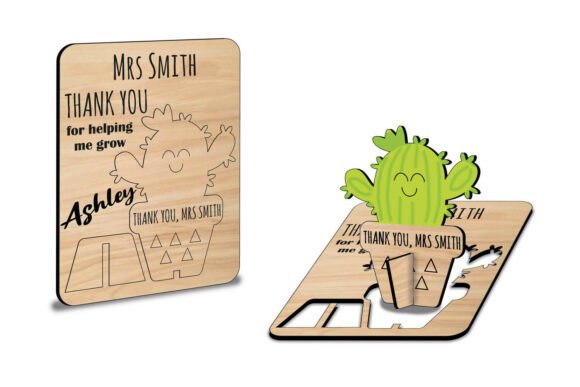
3D Pop-up Teacher Gift Cactus Card SVG
The modern professional landscape is defined by efficiency, personalization, and the ability to deliver high-impact results with minimal friction. Whether you are an educator managing a classroom of diverse needs, a small business owner looking for unique client appreciation strategies, or a hobbyist seeking to refine your digital fabrication skills, the intersection of digital assets and physical output offers significant value. One such asset that bridges this gap effectively is the 3D Pop-up Teacher Gift Cactus Card SVG. This file is not merely a decorative image; it is a precise technical blueprint designed for integration into various manufacturing workflows, from laser cutting to vinyl plotting.
Understanding how to leverage this specific SVG file requires moving beyond its aesthetic appeal and examining its structural logic, material compatibility, and execution parameters. For creators and makers, the success of any physical project relies heavily on the quality of the source vector and the clarity of its layering system. The cactus design serves as an excellent case study in how layered SVGs function within production environments, offering a tangible way to express gratitude while demonstrating technical proficiency in design-to-production pipelines.
Decoding the Vector Architecture
At the core of any successful fabrication process is the integrity of the digital file. The 3D Pop-up Teacher Gift Cactus Card SVG utilizes a color-coded coding system to communicate different mechanical instructions to the cutting machine. This is a standard industry practice that ensures the software interprets the geometry correctly. When you import this file into your preferred vector software—such as Adobe Illustrator, Inkscape, or Silhouette Studio—you will observe distinct color assignments that dictate the machine’s behavior.
- Black Color: This represents the cut path. These lines indicate where the blade or laser head should slice completely through the material to separate the individual components of the card. Precision here is critical; any gaps or overlaps can result in misaligned pieces or damaged material.
- Blue Color: Assigned to engraving operations. If your machine supports both cutting and engraving simultaneously, these paths will be used to etch details onto the surface of the cactus or the card base without severing the material. This adds texture and visual depth to the final product.
- Yellow Color: Designated for scoring. Scoring creates a shallow indentation in the material, allowing it to fold cleanly along specific axes. For a 3D pop-up mechanism, accurate scoring is non-negotiable. It determines the angle and stability of the pop-up structure when the card is opened.
- Red Color: Used strictly for informational purposes. These elements serve as guides for assembly or alignment markers but should not be sent to the cutting bed. Ignoring this distinction prevents unnecessary tool wear and ensures the final output matches the intended design.
Recognizing these distinctions allows you to set up your job queue efficiently. By grouping layers according to their function, you reduce the risk of programming errors and streamline the workflow. This organizational discipline is applicable far beyond this single project; it is a fundamental principle of managing complex digital fabrication tasks.
Material Selection and Machine Compatibility
The versatility of the 3D Pop-up Teacher Gift Cactus Card SVG lies in its adaptability to various substrates. However, the choice of material directly impacts the quality of the cut, the durability of the score lines, and the overall aesthetic outcome. The recommended materials include plywood, MDF (Medium-Density Fiberboard), HDF (High-Density Fiberboard), wood, and acrylic. Each of these presents unique challenges and benefits within a production workflow.
Plywood offers a natural, rustic aesthetic that pairs well with the organic shape of a cactus. It is relatively easy to cut but may require sanding to remove char marks if using a laser. MDF provides a smooth, uniform surface ideal for clean cuts and consistent engraving, though it generates more dust than solid wood. HDF is denser and more durable, suitable for cards that need to withstand frequent handling. Acrylic, particularly clear or colored variants, allows for a modern, sleek look and can be engraved beautifully, though it requires specific laser settings to avoid melting or cracking.
Before initiating the production run, it is essential to calibrate your machine for the selected material. Power settings, speed, and frequency must be adjusted to match the thickness and density of the substrate. A test cut on a scrap piece of the same material is a best practice that saves time and resources. This step verifies that the black cut lines penetrate fully, the blue engrave lines are visible but not too deep, and the yellow score lines allow for crisp folding without breaking the material fibers. Skipping this calibration phase often leads to wasted inventory and frustrated workflows.
Integration into Educational and Professional Workflows
While the primary use case for this item is gifting, its application extends into broader educational and professional contexts. For educators, creating personalized gifts for students or colleagues can foster a positive classroom environment and strengthen relationships. The act of designing and producing the card becomes a learning opportunity, teaching students about vector graphics, material science, and precision engineering.
For freelancers and small business owners, this card can serve as a memorable token of appreciation for long-term clients or team members. Unlike generic store-bought items, a handmade or custom-fabricated gift demonstrates effort and attention to detail. In a marketing context, distributing such unique items can enhance brand perception and encourage word-of-mouth referrals. The cactus theme, symbolizing resilience and low-maintenance care, aligns well with messages of enduring support and steady growth.
Furthermore, this project fits neatly into content creation workflows. Bloggers and social media influencers can document the process of assembling the card, sharing tips on material selection and machine settings. This type of behind-the-scenes content engages audiences interested in DIY projects, crafting, and technology. It positions the creator as an expert who understands both the creative and technical aspects of production.
Execution and Quality Control
Once the machine has completed its operation, the assembly phase begins. This stage requires patience and precision. The scored lines must be folded accurately to ensure the 3D pop-up mechanism functions smoothly. Misaligned folds can cause the card to jam or fail to stand upright. Using a bone folder or a similar blunt tool helps create sharp, clean creases without damaging the material.
Assembly also involves adhering the various components together. Depending on the material, appropriate adhesives should be chosen. Wood glue works well for plywood and MDF, while specialized acrylic adhesives may be needed for plastic components. Ensuring that all parts are securely bonded prevents the card from falling apart during handling. Additionally, consider adding a personal touch by hand-painting the cactus or adding embellishments. While the digital file provides the structure, the finishing touches add character and uniqueness.
Quality control should be applied at every stage. Check for any uncut segments that might have been missed by the machine. Inspect the engraving for consistency and brightness. Verify that the score lines are deep enough to fold easily but not so deep that they weaken the structure. By maintaining high standards throughout the process, you ensure that the final product reflects the quality of your workmanship.
Long-Term Value and Scalability
Investing time in mastering the use of the 3D Pop-up Teacher Gift Cactus Card SVG yields long-term benefits. The skills acquired—vector editing, machine calibration, material selection, and assembly—are transferable to countless other projects. Once you understand the nuances of working with layered SVGs, you can apply these principles to create invitations, packaging, architectural models, and decorative art.
Moreover, having a reliable library of tested designs reduces future setup time. You can archive the optimized settings for each material type, creating a reference guide for quick reproduction. This scalability is crucial for professionals who need to produce multiple units consistently. Whether you are fulfilling orders for a side hustle or preparing gifts for a large group, efficiency gains compound over time.
In conclusion, the 3D Pop-up Teacher Gift Cactus Card SVG is more than just a template for a greeting card. It is a comprehensive tool that facilitates creative expression, technical learning, and professional relationship building. By approaching the project with a focus on preparation, precision, and practical execution, you can transform a simple digital file into a meaningful physical artifact. This process underscores the importance of integrating digital design with physical manufacturing, a skill set that is increasingly valuable in today’s maker economy.